
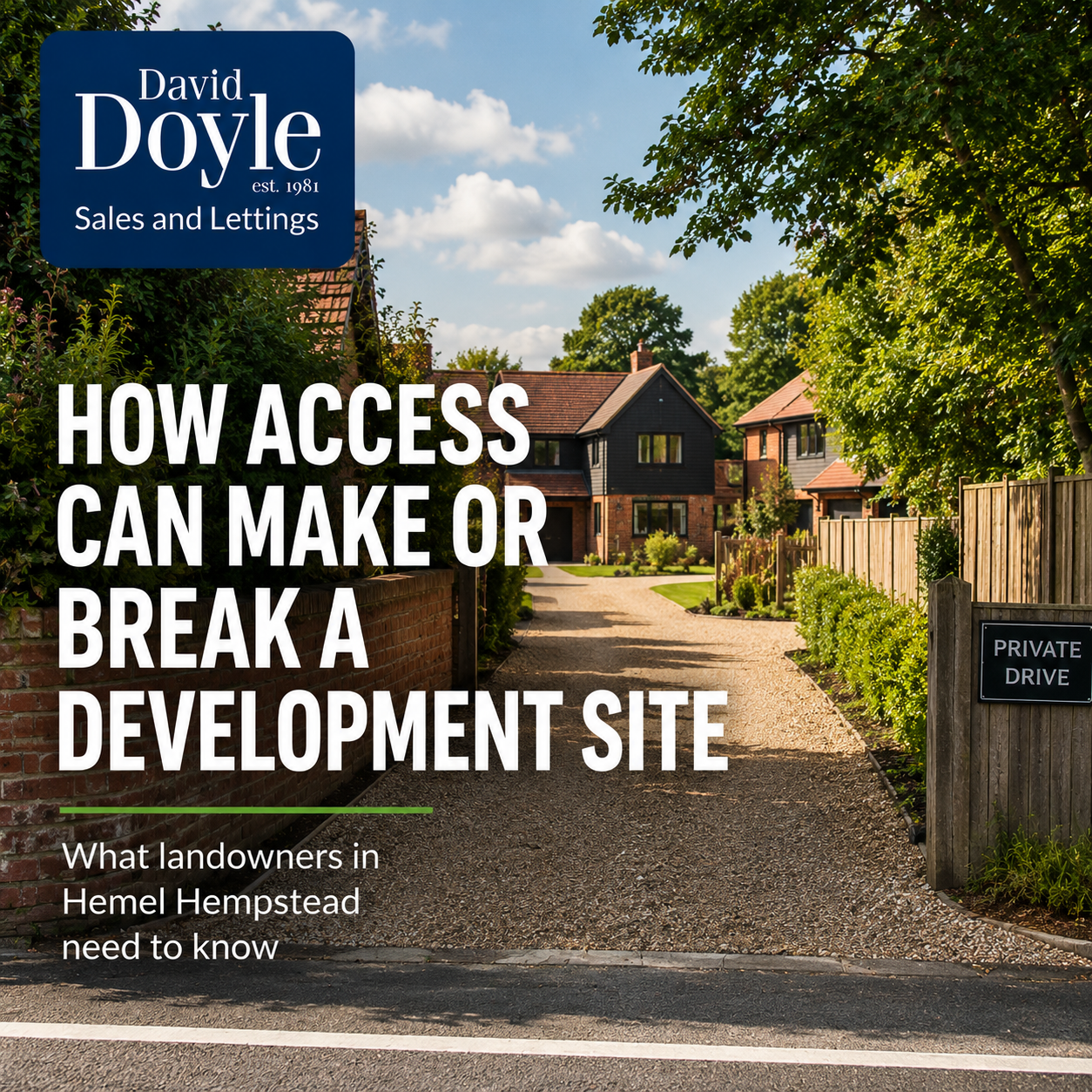
When landowners think about development potential, they often focus on plot size, planning permission, and possible value. But one of the first questions a developer or planning consultant will ask is much simpler: how will the site be accessed?
Access can make or break a development opportunity. A site may look promising on paper, but if vehicles, pedestrians, services, or emergency access cannot be resolved properly, the opportunity can quickly become more complicated.
Why Access Matters So Much
Access is not just about whether there is a driveway or a gap between two buildings.
For a development site to work, access usually needs to be safe, practical, legally available, and suitable for the type of development proposed. It also needs to be acceptable from a planning and highways perspective.
This is why access should be considered early, before money is spent on detailed plans or applications.
Vehicle Access
One of the key questions is whether vehicles can safely enter and leave the site.
This may include cars, delivery vehicles, refuse collection, emergency vehicles, and construction traffic during the build. Even a small development can create concerns if the access is narrow, awkward, poorly positioned, or difficult to use safely.
Visibility onto the road can also be important. If drivers cannot see clearly when leaving the site, this may become a planning or highways issue.
Pedestrian Access
Access is not only about cars.
New homes need to be safe and practical for people walking to and from the site. Planning officers may consider how residents, visitors, children, and service providers will use the entrance day to day.
A scheme that works for vehicles but feels unsafe or inconvenient for pedestrians may still face concerns.
Shared Driveways and Rights of Way
Many potential sites involve shared driveways, private lanes, or land that is accessed across someone else’s property.
These situations need careful checking. A physical access route is not always the same as a legal right to use it for development.
Before relying on shared access, landowners should take proper legal advice to confirm ownership, rights of way, restrictions, maintenance obligations, and whether the access can support the proposed use.
Access for Rear Garden Sites
Rear garden developments can be particularly sensitive.
Even where there appears to be enough land at the back of a property, the site still needs a workable route in and out. This might be via a side driveway, rear lane, private road, or separate access point.
If access would pass close to neighbouring homes, gardens, or windows, planning concerns may arise around noise, privacy, disturbance, and character.
Access During Construction
Some landowners focus only on how the finished homes will be accessed, but construction access can also matter.
Building work may require machinery, deliveries, scaffolding, skips, and contractor parking. If the site is difficult to reach, build costs can rise and disruption can increase.
Developers will usually factor this into what they are prepared to pay.
Services and Utilities
Access also affects how services are brought into the site.
Water, electricity, gas, broadband, drainage, and sewer connections may all need routes through or across land. If these routes are complicated, expensive, or dependent on third party consent, that can affect viability.
This is another reason early technical checks are important.
When Access Problems Can Be Solved
Access challenges do not always rule a site out.
Sometimes a different layout, smaller scheme, improved visibility, adjusted parking arrangement, or revised entrance position can make the site more realistic.
In other cases, the access issue may be too significant. The key is knowing the difference before committing time and money.
Why Early Advice Matters
Access is one of the first things a good land assessment should consider.
If access works, the site may be worth exploring further. If it does not, it is better to know early before investing in drawings, surveys, or planning fees.
For Hemel Hempstead landowners, local context also matters. The surrounding road layout, street character, parking pressure, and neighbouring properties can all influence how access is viewed.
The Bottom Line
Access is one of the most important factors in development potential. It affects planning, design, build costs, legal position, day to day use, and developer appetite.
A site with strong access can become significantly more attractive. A site with poor or uncertain access may still have options, but it needs careful assessment before any decisions are made.
At David Doyle, our Land and New Homes team can help landowners take a practical first look at access, site potential, and likely developer interest before time or money is committed.
Unsure Whether Access Works for Your Site?
Speak to our Land and New Homes team for clear, local advice before exploring your land’s development potential.
You might also be interested in

Aug 22, 2026
What Happens After You Agree to Sell Land to a Developer?
Agreeing to sell land to a developer is a significant step, but it is rarely the end of the process. Once terms are agreed, there are still important stages to work through, including due diligence, l

Aug 8, 2026
Promotion Agreements: A Different Route for Land With Long Term Potential
If you own land with possible long term development potential, you may have heard of a promotion agreement. It is one of several routes landowners can consider when land may have future value, but pla