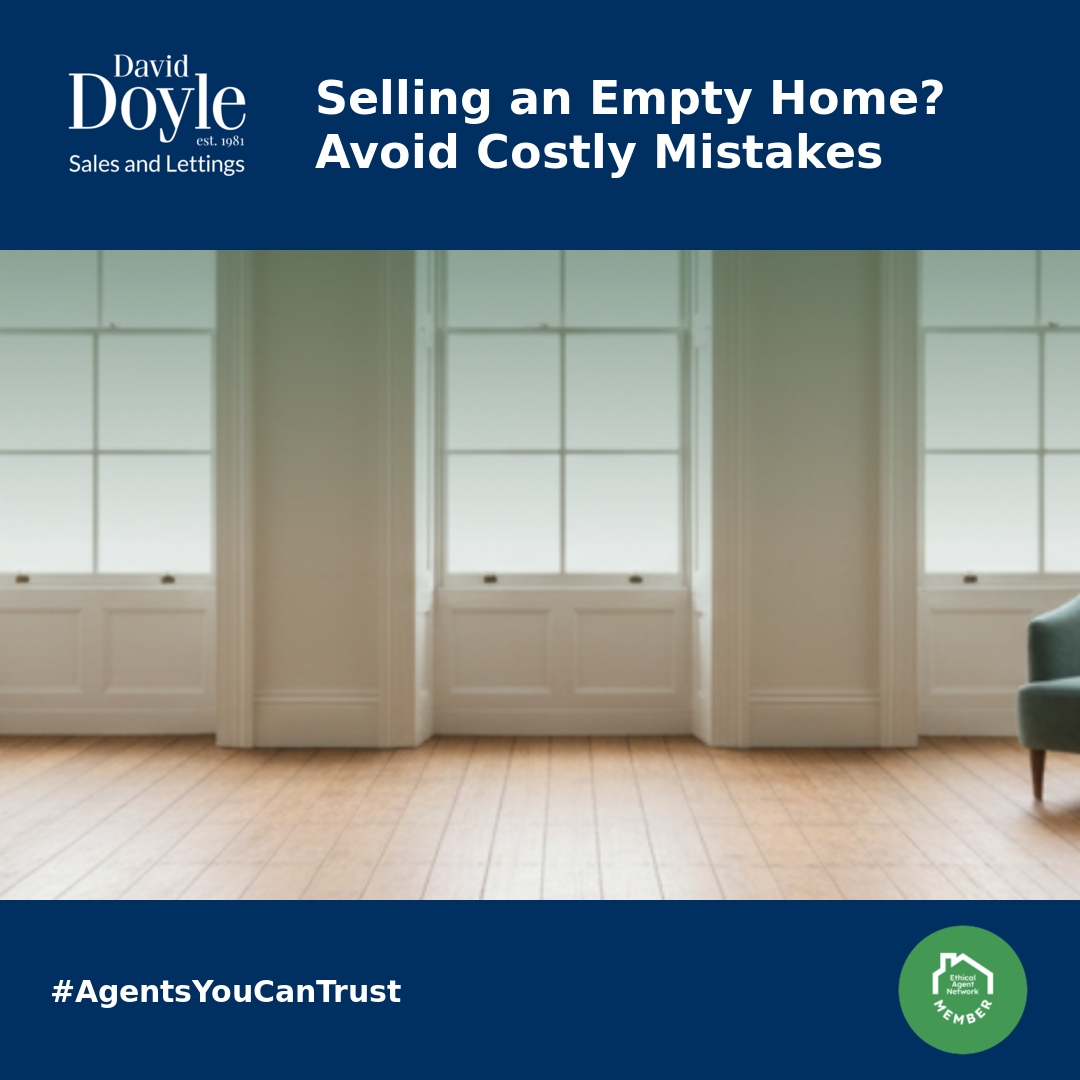
Selling an Empty Home? Avoid These Costly Mistakes
An empty house sounds like the easy version of selling. No tidying
before viewings, no dashing out with the dog while strangers wander
round your kitchen.
In practice, empty homes are usually the harder sell. Perhaps you have
inherited a property, moved for work, or completed on the next place
first. Either way, a vacant home needs managing differently, and this is
how.
Why do empty homes undersell?
Three reasons come up again and again.
First, empty rooms lie about their size. Without furniture, buyers have
no sense of scale, and most people guess smaller, not bigger. A bedroom
with no bed in it somehow never looks like it would take one.
Second, an empty home has no warmth to sell. Buyers buy a feeling as
much as a floor plan, and a cold, echoing house hands them nothing to
imagine themselves into.
Third, vacancy reads as urgency. When buyers sense a seller is carrying
an empty property, offers tend to arrive lower. Fair or not, that is how
people negotiate.
What about your insurance?
This is the expensive one to miss. Standard home insurance commonly
restricts or reduces cover once a property has been empty for more than
a set period, often 30 or 60 days depending on the policy.
Tell your insurer the home is vacant before that clock runs out, not
after something goes wrong. They may extend cover with conditions, such
as regular inspections, or move you to a specialist unoccupied policy.
Keep dated photos of each visit so you can show the conditions were met.
How do you keep an empty home viewing-ready?
Keep the heating on a low background setting through autumn and
winter. It protects the pipes and takes the chill off viewings.
Have the post cleared and the front garden kept. A drift of leaflets
behind the door announces an empty house to everyone.
Put a couple of lamps on timers so the home looks lived in after
dark.
Give a neighbour or your agent a key, and have someone walk through
weekly. Small problems grow quickly in an empty house.
Air the place before viewings. Stale air says empty faster than
empty does.
Should you stage it?
You rarely need to furnish the whole house. Dressing the key rooms,
usually the sitting room and main bedroom, is often enough to restore
scale and warmth. Curtains, lamps and a made-up bed work harder than you
would think.
Ask your agent which rooms are pulling viewings down before spending
anything. Sometimes the answer is simply better photography and a warm
house on the day.
What paperwork can you sort while it stands empty?
Use the quiet weeks. An empty home, especially a probate or relocation
sale, is often waiting on paperwork more than buyers, so get ahead of
it: the EPC, window and boiler certificates, building regulations
sign-off for any works, and the property information forms your
solicitor will need.
If it is a probate sale, talk timings through with the solicitor early,
because marketing can often begin while the legal side catches up, and
buyers can be prepared honestly for the timeline. And do a keys audit:
know exactly who holds a key to this house, and take back the ones you
can't account for.
How should you price an empty home?
Honestly, and with the carrying costs in front of you. An empty house is
not free to own. Council tax usually continues, insurance for an
unoccupied property costs more, the utilities tick over, and if there is
a mortgage it is being paid on a home nobody lives in.
Write down what each month of ownership costs you, because that number
belongs in your pricing decision. Holding out for months chasing an
extra sliver of asking price often costs more in carrying costs, and in
the listing going stale, than the sliver was ever worth. Price on the
current evidence, sell in season, and stop paying bills on an empty
house.
So can an empty home still sell well?
Absolutely. It just needs someone actively managing presentation,
insurance and pricing rather than leaving the keys in a drawer and
hoping.
If you are selling a vacant property, locally or from a distance, we are
happy to be that someone. Get in touch, we are here to help.
Frequently asked questions
Do empty homes take longer to sell?
They are certainly harder to present well, and presentation is what
sells. Managed properly, with warmth, light and scale restored, an empty
home competes on level terms.
Do I need to tell my insurer the house is empty?
Yes. Standard policies commonly restrict cover once a home has been
unoccupied beyond a set period, often 30 or 60 days. Speak to your
insurer before that point.
Should I turn the heating off in an empty house?
Not in the colder months. A low background temperature protects pipes
from freezing, helps keep damp at bay and makes viewings feel completely
different.
If you know someone who would find this useful, please share it with
them.
About the Ethical Agent Network
The Ethical Agent Network (EAN) is a national group of independent
agents held to strict, independently assessed standards on honesty,
service and community. It is not a badge you buy. It is one you earn,
and have to keep earning. We are proud members, and the logo is there so
you can spot an agent who has already been vetted to look after you
properly. If you would like to know more about the Ethical Agent
Network, please get in touch or visit www.ethicalagentnetwork.co.uk.
Insurance, on standard policy time limits for empty homes. Checked and
verified in force 2 September 2026.
For clear advice about selling your home in Hemel Hempstead, contact our experienced local team today.
You might also be interested in
Oct 8, 2026
Should Sellers Wait for the Budget Before Listing?
Should Sellers Wait for the Budget Before Listing? The Autumn Budget lands on Wednesday 28 October. If you are thinking of selling, someone has probably already told you to wait and see. It sounds sen