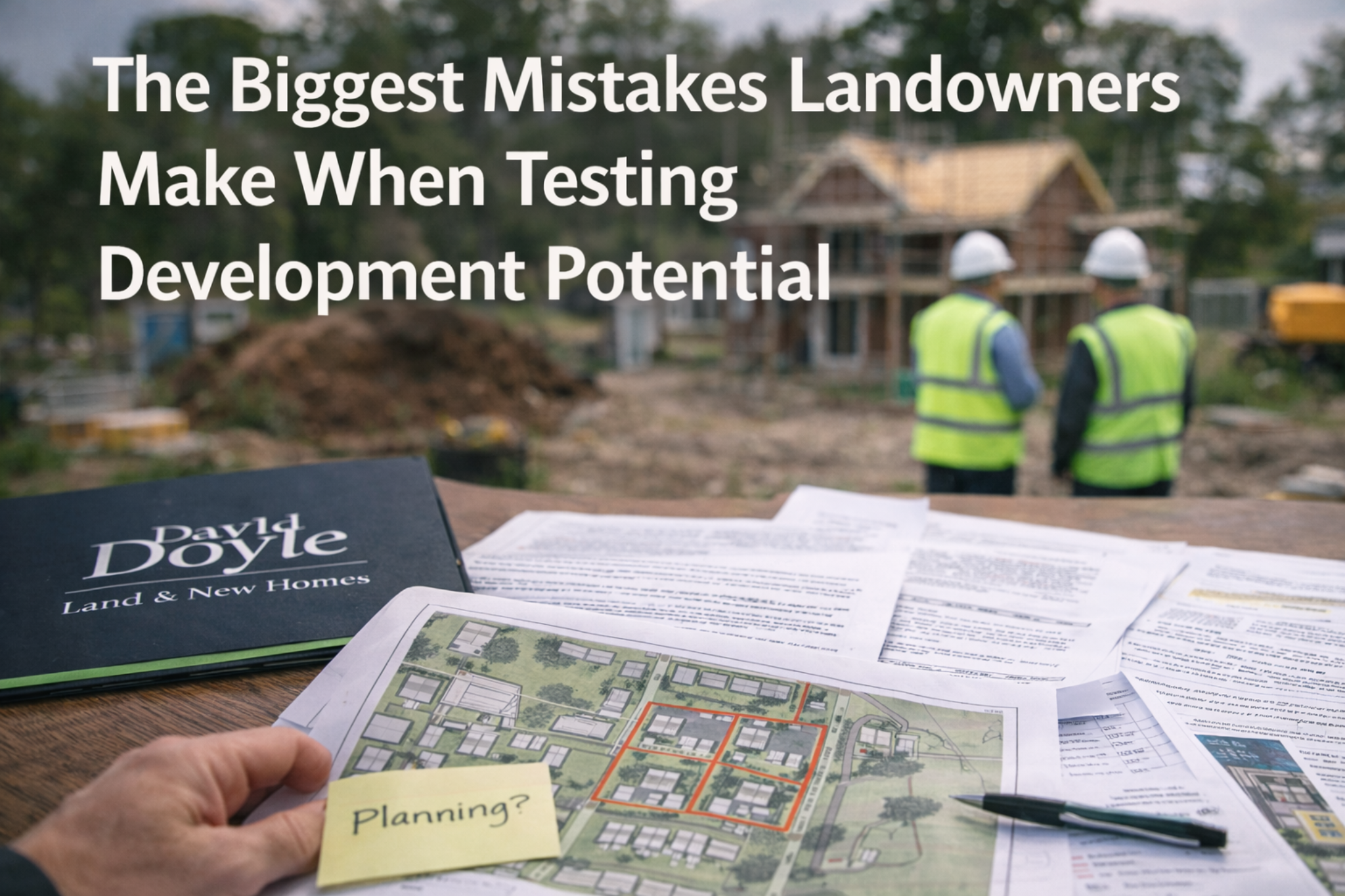
Most landowners only explore development potential once. It is not something people do regularly, which is why the same mistakes tend to repeat. Often, the intention is right, but the approach leads to wasted time, unnecessary cost, or missed opportunity.
Starting With Plans Instead of Understanding Demand
One of the most common mistakes is going straight to an architect and commissioning drawings before understanding whether the idea is viable.
Plans can be helpful, but they do not guarantee planning support or market demand. In some cases, they can even anchor expectations around a scheme that was never realistic in the first place.
Understanding what developers would actually buy, and what has been approved locally, should come first.
Assuming Size Equals Potential
A large garden or plot does not automatically mean development will be supported.
Access, layout, neighbouring properties, and street character all play a role. Some smaller plots work well because they fit naturally within the street, while larger ones can struggle if the layout is awkward.
Relying Too Heavily on Online Estimates
Online tools can be useful for residential property, but they rarely reflect the true value of land.
Development value depends on planning potential, build costs, end values, and risk. These are not things automated estimates can capture accurately.
Ignoring Planning Precedent
What has already been approved nearby often tells you more than any initial idea.
Planning decisions are heavily influenced by local context. If similar schemes have been approved in your area, that strengthens your position. If they have been refused, it is important to understand why.
Trying to Maximise Rather Than Fit In
It is natural to want to achieve the highest possible value, but pushing too hard on density or scale can reduce the likelihood of success.
The most successful schemes tend to feel like a natural extension of the street rather than an obvious attempt to maximise the plot.
Leaving Conversations Too Late
Some landowners only speak to an agent or developer once they have already invested time and money.
At that stage, decisions can feel fixed. Earlier conversations often open up better options, including routes that involve less risk or deliver a cleaner outcome.
The Bottom Line
Testing development potential is not about guessing or rushing into plans. It is about understanding context, demand, and what is realistically achievable in your specific location.
If you own land or a property in Hemel Hempstead and are considering your options, a straightforward conversation at the start can help you avoid common pitfalls and make more informed decisions.
At David Doyle, our Land and New Homes team provides practical, local advice based on what is actually happening on the ground, not just theory.
Unsure About Your Land’s Potential?
Speak to our Land and New Homes team for clear, honest advice before making any decisions.
You might also be interested in
Aug 22, 2026
What Happens After You Agree to Sell Land to a Developer?
Agreeing to sell land to a developer is a significant step, but it is rarely the end of the process. Once terms are agreed, there are still important stages to work through, including due diligence, l