Why Design Quality Can Make or Break a Small Development
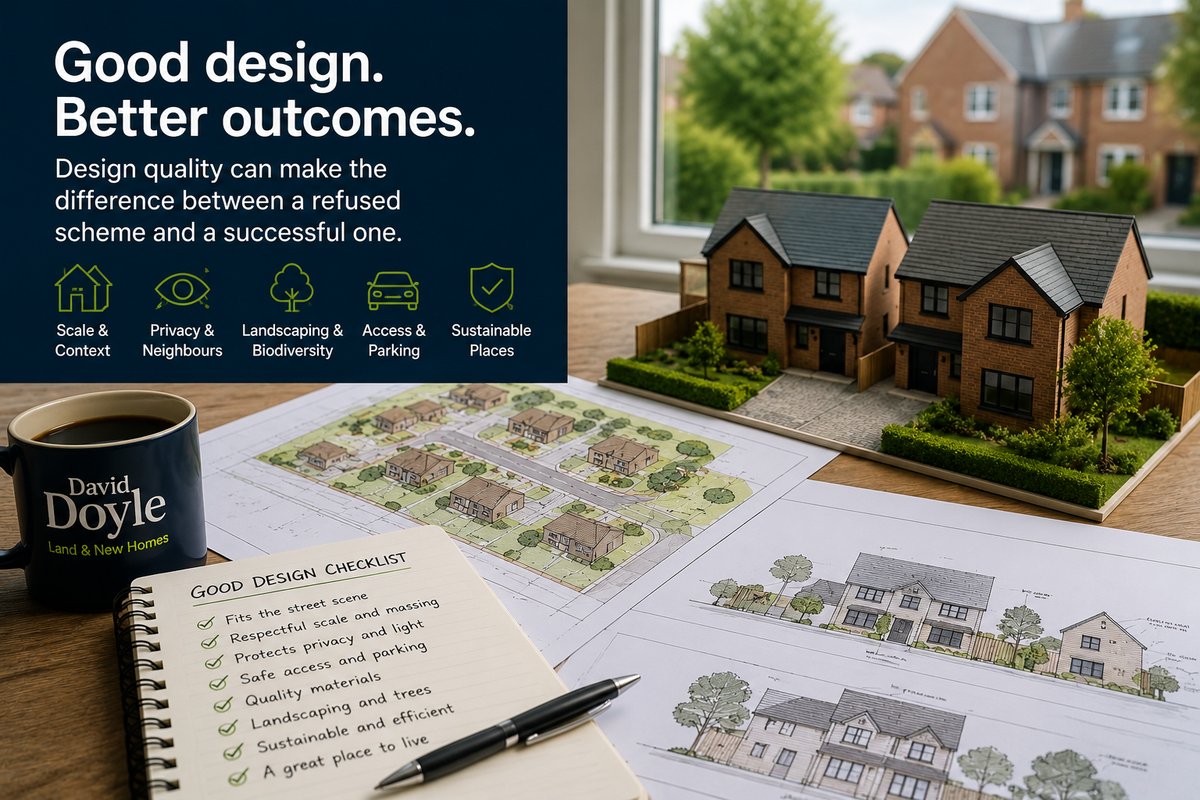
When landowners think about development potential, the first questions are often about size, value, and planning permission. Those things matter, but design quality can be just as important. A small development that feels carefully considered has a much better chance of being supported than one that looks forced onto the site.
Why Design Quality Matters
Small developments are often located within existing residential streets. That means the new homes need to sit comfortably alongside neighbouring properties, rather than feeling out of place.
Planning decisions are not only about whether a plot is large enough. They also consider how a proposal looks, how it affects neighbours, how it relates to the street, and whether it creates a good place to live.
Fitting In Without Copying Everything Around It
Good design does not mean every new home has to look exactly like the houses nearby.
Modern homes can work well in established areas when the scale, materials, roofline, spacing, and landscaping are handled carefully. The aim is to respect the character of the area while still creating something practical and attractive.
Scale and Proportion
One of the most common reasons small developments run into difficulty is scale.
If a proposal feels too tall, too bulky, or too close to neighbouring homes, it can quickly attract concern. A slightly smaller, better proportioned scheme can sometimes be more successful than a larger proposal that tries to maximise every inch of land.
Privacy and Neighbour Impact
Neighbour impact is a major consideration in small developments.
Planning officers will look carefully at overlooking, loss of light, garden relationships, boundary treatment, and how windows are positioned. A well designed scheme thinks about these issues from the beginning, rather than trying to solve them after objections are raised.
Access, Parking, and Practical Layout
Even an attractive design can struggle if the practical details do not work.
Access needs to be safe and realistic. Parking should feel usable rather than squeezed in. Bin storage, cycle storage, turning space, deliveries, and day to day living all need to be considered.
These details may not sound exciting, but they often make the difference between a scheme that works and one that feels compromised.
Landscaping and Outdoor Space
Landscaping is sometimes treated as an afterthought, but it can strongly influence how a small development is viewed.
Good boundary planting, usable gardens, trees, soft landscaping, and thoughtful screening can help a new home sit more naturally within its setting.
This is increasingly important as planning places more focus on biodiversity, drainage, and the overall quality of residential environments.
Design Quality and Value
Better design is not only about planning. It also affects market value.
Homes that feel well planned, light, private, and practical are easier to sell. Buyers notice when a layout works. They also notice when a property feels cramped, overlooked, or awkwardly arranged.
For developers, that means design quality can directly influence confidence, pricing, and demand.
Why Early Advice Helps
Design problems are easier to avoid at the start than fix later.
Before commissioning detailed plans, it is worth understanding what type of scheme is likely to suit the site, what nearby buyers would value, and what planning issues are likely to matter most.
This can save time, cost, and frustration.
The Bottom Line
Small development is not just about fitting homes onto land. It is about creating homes that work for the street, the neighbours, the future buyers, and the landowner.
For Hemel Hempstead landowners, strong design quality can improve planning prospects, increase buyer appeal, and help unlock the right value from a site.
At David Doyle, our Land and New Homes team can help landowners and developers understand how local demand, planning context, and design quality come together before decisions are made.
Planning a Small Development?
Speak to our Land and New Homes team for practical local advice on design, demand, and development potential.
You might also be interested in
Aug 22, 2026
What Happens After You Agree to Sell Land to a Developer?
Agreeing to sell land to a developer is a significant step, but it is rarely the end of the process. Once terms are agreed, there are still important stages to work through, including due diligence, l