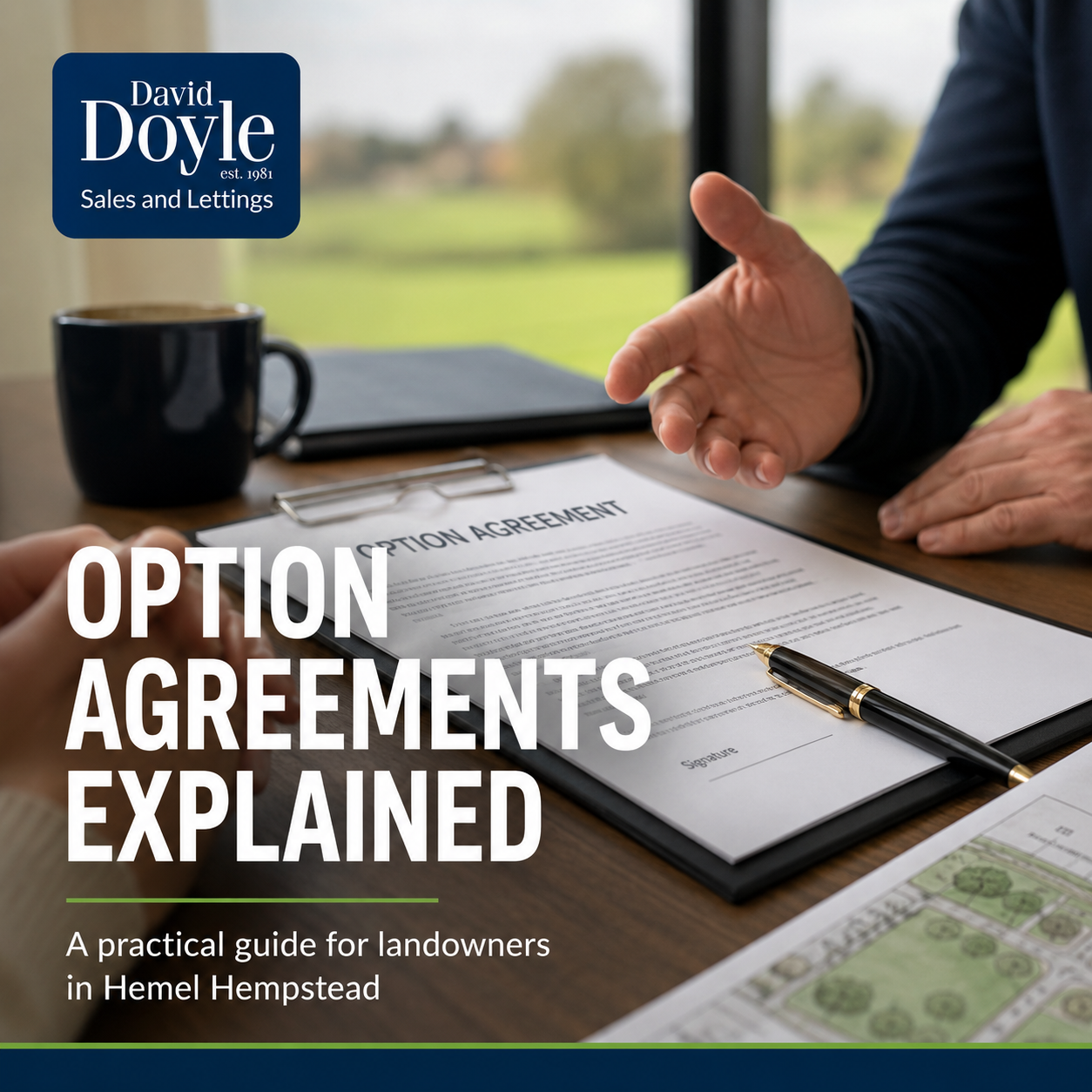
If you own land, a large garden, a bungalow on a generous plot, or property with possible development potential, you may hear the phrase “option agreement” during conversations with developers. It can sound technical, but the basic idea is simple. A developer may want the right to buy your land in the future if certain conditions are met, often linked to planning permission.
What Is an Option Agreement?
An option agreement is a legal agreement between a landowner and a potential buyer, often a developer.
It usually gives the developer the right, but not always the obligation, to buy the land within an agreed period of time. If the developer chooses to exercise the option within that period, the landowner is normally required to sell on the agreed terms.
This is different from a straightforward sale, where both parties usually move toward exchange and completion more directly.
Why Developers Use Option Agreements
Developers often use option agreements where land has potential but planning permission is not yet in place.
The agreement gives the developer time to investigate the site, explore planning prospects, carry out surveys, and decide whether the opportunity is commercially viable.
From the developer’s perspective, it can reduce risk because they are not buying the land outright before they know whether the scheme can proceed.
Why Landowners May Consider an Option Agreement
For landowners, an option agreement can create a route to unlocking value without immediately selling the land.
In some cases, the developer may take responsibility for progressing planning work, depending on the terms agreed. The landowner may also receive an option fee, although the amount and treatment of that fee will depend on the agreement.
However, it is important to understand that an option agreement can tie up the land for a period of time. That may limit your ability to sell to someone else while the agreement is in place.
The Key Terms to Understand
Before entering into any option agreement, the detail matters. Landowners should understand:
- How long the option period lasts
- Whether the developer can extend that period
- How the purchase price will be calculated
- What happens if planning permission is refused
- Who controls the planning application
- Whether the developer can assign the option to another party
- What costs, fees, and professional expenses are covered
These points should be reviewed carefully with professional advice before anything is signed.
Price Mechanisms Can Be Complex
Some option agreements include a fixed purchase price. Others use a formula linked to the value of the land once planning permission is granted.
Both approaches can work, but they create different risks. A fixed price may offer certainty, but could look too low later if planning significantly improves value. A formula may feel fairer, but it needs to be drafted clearly so there is no confusion when the time comes.
Why Independent Advice Is Essential
An option agreement is a legal document with long term implications.
Landowners should always take independent legal advice before signing. It is also sensible to take land and market advice so you understand whether the proposed terms reflect genuine demand and value.
A developer may be acting in good faith, but their interests are not the same as yours. You need advice that protects your position.
When an Option Agreement May Be Suitable
An option agreement may make sense where the land has development potential but planning permission is uncertain or requires time to explore.
It can also work where a landowner does not want to manage the planning process themselves but is open to allowing a developer to investigate the opportunity.
It is less suitable where the landowner needs a quick sale, wants complete flexibility, or is uncomfortable with the land being tied up for a longer period.
How Option Agreements Differ From Promotion Agreements
An option agreement normally gives a developer the right to buy the land if the agreed conditions are met.
A promotion agreement is different. Under a promotion agreement, a promoter usually works to secure planning permission and then market the land for sale, with the promoter receiving an agreed share of the proceeds if successful.
Both structures can be useful, but they suit different situations. The right route depends on the land, the planning position, the landowner’s aims, and the commercial terms being offered.
The Bottom Line
Option agreements can be useful, but they should never be treated casually. They can affect control, timing, value, and your ability to deal with the land in the future.
For Hemel Hempstead landowners, the most important step is to understand the agreement before committing. That means looking beyond the headline price and considering the full commercial and legal position.
At David Doyle, our Land and New Homes team can help landowners understand developer approaches, compare options, and take informed advice before decisions are made.
Been Asked to Sign an Option Agreement?
Speak to our Land and New Homes team before committing, so you can understand the offer, the market, and your wider options.
You might also be interested in
Aug 22, 2026
What Happens After You Agree to Sell Land to a Developer?
Agreeing to sell land to a developer is a significant step, but it is rarely the end of the process. Once terms are agreed, there are still important stages to work through, including due diligence, l